- EN
- English

Moving to FARO? Here's What You Actually Need to Know
Moving to FARO? Here's What You Actually Need to Know
Moving to FARO? Here's What You Actually Need to Know
Service Title
Service Title
You can edit text on your website by double clicking on a text box on your website. Alternatively, when you select a text box a settings menu will appear. Selecting ‘Edit Text’ from this menu will also allow you to edit the text within this text box.
Moving to a new country can be overwhelming. You have to figure out which neighborhoods feel right, what schools and healthcare options exist, where to shop and eat, and whether the lifestyle will actually suit you. It is a lot to take in, especially when you are preparing for one of the biggest decisions of your life.
Even people who have relocated internationally before can feel the pressure. Choose the wrong area and suddenly you are dealing with long commutes, difficulty integrating, or feeling far from the community atmosphere you hoped for. The Algarve may look idyllic from afar, but choosing the right part of Faro for your lifestyle makes all the difference. Relocating is a journey filled with unknowns, and that can be stressful.
That is why having clear, reliable information about your future home can be a game-changer. This guide gives you grounded, real-life insights into what it is like to live in Faro, covering everything from practical essentials like healthcare, housing, and transport to the enjoyable parts of everyday life, like local culture, beaches, food, and outdoor activities.
Moving to a new country can be overwhelming. You have to figure out which neighborhoods feel right, what schools and healthcare options exist, where to shop and eat, and whether the lifestyle will actually suit you. It is a lot to take in, especially when you are preparing for one of the biggest decisions of your life.
Even people who have relocated internationally before can feel the pressure. Choose the wrong area and suddenly you are dealing with long commutes, difficulty integrating, or feeling far from the community atmosphere you hoped for. The Algarve may look idyllic from afar, but choosing the right part of Faro for your lifestyle makes all the difference. Relocating is a journey filled with unknowns, and that can be stressful.
That is why having clear, reliable information about your future home can be a game-changer. This guide gives you grounded, real-life insights into what it is like to live in Faro, covering everything from practical essentials like healthcare, housing, and transport to the enjoyable parts of everyday life, like local culture, beaches, food, and outdoor activities.
Quick Facts About Faro District
Location: Southern Portugal, approx. 37°01'N 7°56'W, on the coastline of the Algarve and bordering the Ria Formosa lagoon.
Area: 202.6 km² (Faro municipality).
Capital City: Faro is the capital of the Algarve region.
Population: Approx. 70,000 (Faro municipality, 2024 estimate); ~450,000 in the wider Algarve region.
Climate: Mediterranean with strong coastal influence. Hot, dry summers and mild winters.
Average Annual Temperature: Around 18–19°C (64–66°F).
Summer (June–August): Typically 28–31°C (82–88°F), often warmer inland; sea breezes keep temperatures pleasant.
Winter (December–February): Generally 10–16°C (50–61°F), with mild temperatures and limited rainfall compared to northern Portugal.
Geography: Coastal urban area facing the Ria Formosa Natural Park, a protected lagoon system. Features beaches, barrier islands, flat terrain, a walkable historic centre, and proximity to nature and the Atlantic coastline.
Useful Contacts
- Emergencies (Police, Ambulance, Firefighters): 112
- Non-Emergency Medical Advice (SNS Saúde 24): 808 24 24 24
- Faro City Hall (Câmara Municipal de Faro): +351 289 870 870
- Faro Tourism Office (Posto de Turismo de Faro): +351 289 803 604
- Faro Airport (Aeroporto de Faro): +351 289 800 800
- University of the Algarve (Universidade do Algarve): +351 289 800 100
- Centro Hospitalar Universitário do Algarve – Hospital de Faro: +351 289 891 100
Location, Geography & Climate
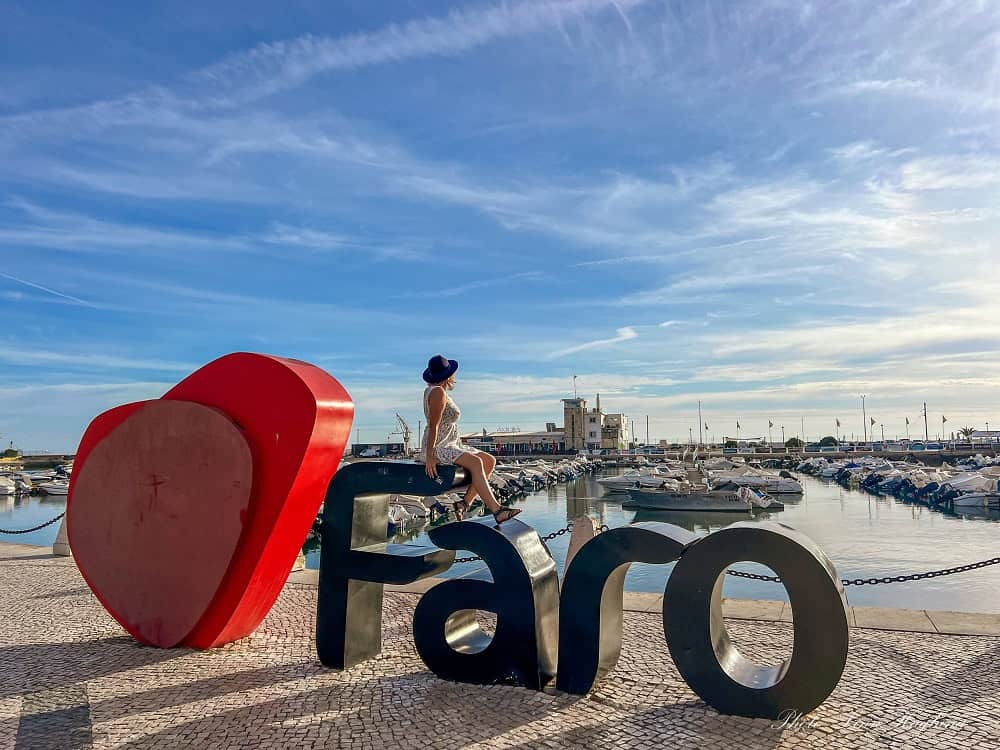
Faro sits in southern Portugal as the capital of the Algarve, right along the Ria Formosa lagoon and just a short hop from the Atlantic. Instead of hills and steep climbs, Faro is mostly flat and easy to navigate, which makes walking or cycling around the city surprisingly effortless. The historic Old Town is full of cobbled streets and ancient walls, while the rest of the city spreads toward the marina, university areas, and the natural park.
What really defines Faro is the landscape around it. The Ria Formosa creates a mix of islands, sandbanks, and calm waterways. It is a paradise for birdwatching, boat trips, kayaking, and those long, peaceful beach days on the islands like Faro, Culatra, or Deserta.
The climate is one of Faro’s biggest perks. You get a classic Mediterranean vibe with long, hot, sunny summers and mild winters. Rain is limited and usually shows up between late autumn and early spring, but even then, temperatures stay comfortable. No harsh winters, no suffocating humidity, just plenty of sun and some of the best weather in all of Portugal. Outdoor living is pretty much a year-round lifestyle here.
Location, Geography & Climate
Faro sits in southern Portugal as the capital of the Algarve, right along the Ria Formosa lagoon and just a short hop from the Atlantic. Instead of hills and steep climbs, Faro is mostly flat and easy to navigate, which makes walking or cycling around the city surprisingly effortless. The historic Old Town is full of cobbled streets and ancient walls, while the rest of the city spreads toward the marina, university areas, and the natural park.
What really defines Faro is the landscape around it. The Ria Formosa creates a mix of islands, sandbanks, and calm waterways. It is a paradise for birdwatching, boat trips, kayaking, and those long, peaceful beach days on the islands like Faro, Culatra, or Deserta.
The climate is one of Faro’s biggest perks. You get a classic Mediterranean vibe with long, hot, sunny summers and mild winters. Rain is limited and usually shows up between late autumn and early spring, but even then, temperatures stay comfortable. No harsh winters, no suffocating humidity, just plenty of sun and some of the best weather in all of Portugal. Outdoor living is pretty much a year-round lifestyle here.
Location, Geography & Climate
Faro sits in southern Portugal as the capital of the Algarve, right along the Ria Formosa lagoon and just a short hop from the Atlantic. Instead of hills and steep climbs, Faro is mostly flat and easy to navigate, which makes walking or cycling around the city surprisingly effortless. The historic Old Town is full of cobbled streets and ancient walls, while the rest of the city spreads toward the marina, university areas, and the natural park.
What really defines Faro is the landscape around it. The Ria Formosa creates a mix of islands, sandbanks, and calm waterways. It is a paradise for birdwatching, boat trips, kayaking, and those long, peaceful beach days on the islands like Faro, Culatra, or Deserta.
The climate is one of Faro’s biggest perks. You get a classic Mediterranean vibe with long, hot, sunny summers and mild winters. Rain is limited and usually shows up between late autumn and early spring, but even then, temperatures stay comfortable. No harsh winters, no suffocating humidity, just plenty of sun and some of the best weather in all of Portugal. Outdoor living is pretty much a year-round lifestyle here.
Location, Geography & Climate
Faro sits in southern Portugal as the capital of the Algarve, right along the Ria Formosa lagoon and just a short hop from the Atlantic. Instead of hills and steep climbs, Faro is mostly flat and easy to navigate, which makes walking or cycling around the city surprisingly effortless. The historic Old Town is full of cobbled streets and ancient walls, while the rest of the city spreads toward the marina, university areas, and the natural park.
What really defines Faro is the landscape around it. The Ria Formosa creates a mix of islands, sandbanks, and calm waterways. It is a paradise for birdwatching, boat trips, kayaking, and those long, peaceful beach days on the islands like Faro, Culatra, or Deserta.
The climate is one of Faro’s biggest perks. You get a classic Mediterranean vibe with long, hot, sunny summers and mild winters. Rain is limited and usually shows up between late autumn and early spring, but even then, temperatures stay comfortable. No harsh winters, no suffocating humidity, just plenty of sun and some of the best weather in all of Portugal. Outdoor living is pretty much a year-round lifestyle here.
Community & Economy
Over 70,000 people live in Faro itself, with around 450,000 in the wider Algarve region. While it is much smaller than Lisbon, Faro is one of Portugal’s most internationally blended areas. A significant number of residents are non-nationals, especially from the United Kingdom, France, Brazil, Germany, and other EU countries who choose the Algarve for its climate, safety, and relaxed lifestyle.
Faro’s quality of life scores high thanks to its safety, clean environment, access to beaches and nature, and a steady flow of services year-round. Unlike resort towns that slow down off-season, Faro stays active because it is the region’s administrative, educational, and transport hub.
The local economy is solid and built around several key sectors:
- Tourism & Hospitality: A major driver, thanks to Faro Airport, Ria Formosa, and year-round visitors. Creates lots of job opportunities but also means seasonal peaks.
- Education & Research: The University of the Algarve is one of the city’s biggest employers and attracts international students, researchers, and professionals.
- Healthcare & Public Services: As the regional capital, Faro hosts administrative offices, courts, and the main hospital for the Algarve.
- Transport & Logistics: Faro Airport connects the Algarve to Europe, supporting aviation, logistics, and travel-related industries.
- Marine & Environmental Sciences: With Ria Formosa and coastal research centers, marine biology, conservation, aquaculture, and environmental innovation are growing fields.
- Retail & Services: A stable year-round sector that supports both residents and tourists, keeping the local economy from becoming too seasonal.
Faro offers a strong balance: international but calm, economically active but not chaotic, and deeply connected to both nature and culture.
Community & Economy
Over 70,000 people live in Faro itself, with around 450,000 in the wider Algarve region. While it is much smaller than Lisbon, Faro is one of Portugal’s most internationally blended areas. A significant number of residents are non-nationals, especially from the United Kingdom, France, Brazil, Germany, and other EU countries who choose the Algarve for its climate, safety, and relaxed lifestyle.
Faro’s quality of life scores high thanks to its safety, clean environment, access to beaches and nature, and a steady flow of services year-round. Unlike resort towns that slow down off-season, Faro stays active because it is the region’s administrative, educational, and transport hub.
The local economy is solid and built around several key sectors:
- Tourism & Hospitality: A major driver, thanks to Faro Airport, Ria Formosa, and year-round visitors. Creates lots of job opportunities but also means seasonal peaks.
- Education & Research: The University of the Algarve is one of the city’s biggest employers and attracts international students, researchers, and professionals.
- Healthcare & Public Services: As the regional capital, Faro hosts administrative offices, courts, and the main hospital for the Algarve.
- Transport & Logistics: Faro Airport connects the Algarve to Europe, supporting aviation, logistics, and travel-related industries.
- Marine & Environmental Sciences: With Ria Formosa and coastal research centers, marine biology, conservation, aquaculture, and environmental innovation are growing fields.
- Retail & Services: A stable year-round sector that supports both residents and tourists, keeping the local economy from becoming too seasonal.
-
Faro offers a strong balance: international but calm, economically active but not chaotic, and deeply connected to both nature and culture.
Quality of Life, Education & Healthcare
For education, the University of the Algarve (Universidade do Algarve) is the region’s main higher‑education institution, offering a wide range of undergraduate, master’s, and doctoral programmes across areas like science, health technologies, engineering, arts, management, tourism, and more. It is a central part of Faro’s academic community, drawing international students and fostering cultural and research activities. Faro also has a network of public and private schools providing education from early years through secondary school, ensuring local families have options close to home.
Healthcare in Faro is modern and accessible. The ULS Algarve - Hospital de Faro serves as the main public hospital in the region, providing emergency care and specialised medical services under Portugal’s National Health Service (SNS). There are also a private hospital Hospital Particular do Algarve - Gambelas - Grupo HPA Saúde in the area offering alternative options for care and shorter waiting times if needed.
Quality of Life, Education & Healthcare
For education, the University of the Algarve (Universidade do Algarve) is the region’s main higher‑education institution, offering a wide range of undergraduate, master’s, and doctoral programmes across areas like science, health technologies, engineering, arts, management, tourism, and more. It is a central part of Faro’s academic community, drawing international students and fostering cultural and research activities. Faro also has a network of public and private schools providing education from early years through secondary school, ensuring local families have options close to home.
Healthcare in Faro is modern and accessible. The ULS Algarve - Hospital de Faro serves as the main public hospital in the region, providing emergency care and specialised medical services under Portugal’s National Health Service (SNS). There are also a private hospital Hospital Particular do Algarve - Gambelas - Grupo HPA Saúde in the area offering alternative options for care and shorter waiting times if needed.
Transportation
Faro Airport (aeroportofaro.pt) is the main gateway to the Algarve, offering both domestic and international flights. This makes it easy to travel home for holidays or welcome visitors.
Within Faro, getting around is straightforward. The city is mostly flat, so walking or cycling is practical and pleasant. Public transport includes buses and regional services connecting Faro to nearby towns like Loulé, Olhão, and Tavira. For trips along the Algarve coast or further into Portugal, the Linha do Algarve (cp.pt) railway connects Faro to Lagos, Portimão, Albufeira, and Tavira, and links to Lisbon via regional trains.
While the Algarve doesn’t have Lisbon-style trams or metro, Faro’s compact layout, pedestrian-friendly streets, and reliable bus and train connections make commuting simple and stress-free. For those exploring the region, renting a car can also be convenient to reach beaches, the countryside, and smaller towns.
Transportation
Faro Airport (aeroportofaro.pt) is the main gateway to the Algarve, offering both domestic and international flights. This makes it easy to travel home for holidays or welcome visitors.
Within Faro, getting around is straightforward. The city is mostly flat, so walking or cycling is practical and pleasant. Public transport includes buses and regional services connecting Faro to nearby towns like Loulé, Olhão, and Tavira. For trips along the Algarve coast or further into Portugal, the Linha do Algarve (cp.pt) railway connects Faro to Lagos, Portimão, Albufeira, and Tavira, and links to Lisbon via regional trains.
While the Algarve doesn’t have Lisbon-style trams or metro, Faro’s compact layout, pedestrian-friendly streets, and reliable bus and train connections make commuting simple and stress-free. For those exploring the region, renting a car can also be convenient to reach beaches, the countryside, and smaller towns.
Culture & Activities
Faro blends its historic maritime and Moorish heritage with contemporary Algarve culture. The city has festivals, concerts, art exhibitions, and cultural events throughout the year, so you will always find something interesting to do — without the crowds of larger cities.
Top Attractions & Landmarks:
- Faro Old Town: The historic heart of Faro, full of cobbled streets, whitewashed houses, and charm. It feels like stepping back in time.
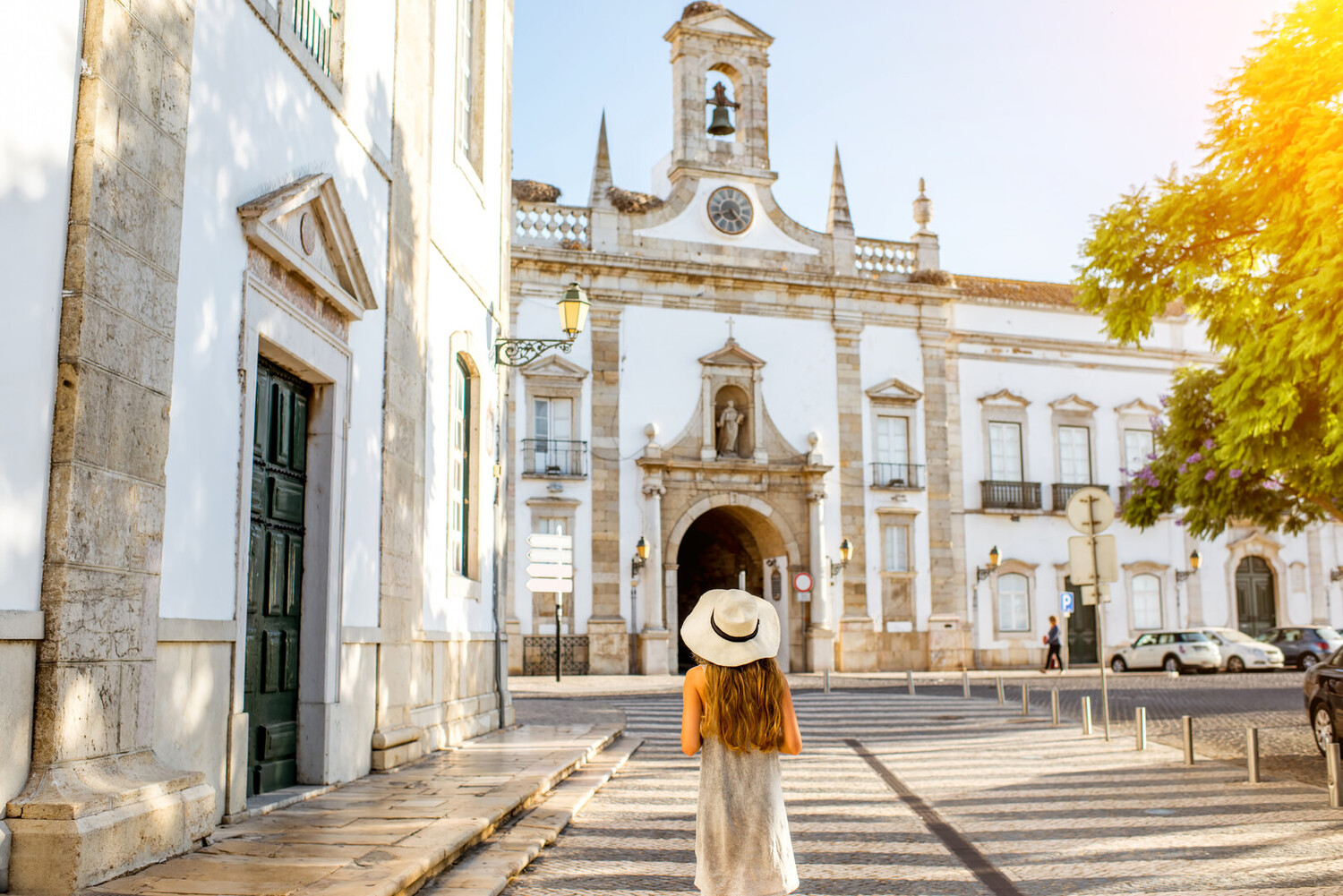
- Arco da Vila: A beautiful neoclassical gateway that leads into the Old Town, with storks often nesting atop its towers.
- Faro Cathedral : A stunning cathedral dating from the 13th century with a bell tower you can climb for panoramic views over the city and the Ria Formosa.
- Carmo Church & Chapel of Bones: A Baroque church famous for its Chapel of Bones, decorated with the skeletal remains of monks — one of Faro’s most unique and memorable sights.
- Municipal Museum of Faro: A museum inside a former 16th‑century convent with Roman mosaics and artifacts that trace Faro’s long history.
- Praça Dom Francisco Gomes: The main square in Faro where you can relax at cafés and watch daily life in the city unfold — a lovely spot in the Old Town.
- Ria Formosa Natural Park: Not far from the city centre, this protected lagoon system is ideal for birdwatching, boat tours, and exploring barrier islands like Ilha do Farol and Ilha Deserta, known for their beautiful beaches.
Culture & Activities
Faro blends its historic maritime and Moorish heritage with contemporary Algarve culture. The city has festivals, concerts, art exhibitions, and cultural events throughout the year, so you will always find something interesting to do — without the crowds of larger cities.
Top Attractions & Landmarks:
- Faro Old Town: The historic heart of Faro, full of cobbled streets, whitewashed houses, and charm. It feels like stepping back in time.
- Arco da Vila: A beautiful neoclassical gateway that leads into the Old Town, with storks often nesting atop its towers.
- Faro Cathedral : A stunning cathedral dating from the 13th century with a bell tower you can climb for panoramic views over the city and the Ria Formosa.
- Carmo Church & Chapel of Bones: A Baroque church famous for its Chapel of Bones, decorated with the skeletal remains of monks — one of Faro’s most unique and memorable sights.
- Municipal Museum of Faro: A museum inside a former 16th‑century convent with Roman mosaics and artifacts that trace Faro’s long history.
- Praça Dom Francisco Gomes: The main square in Faro where you can relax at cafés and watch daily life in the city unfold — a lovely spot in the Old Town.
- Ria Formosa Natural Park: Not far from the city centre, this protected lagoon system is ideal for birdwatching, boat tours, and exploring barrier islands like Ilha do Farol and Ilha Deserta, known for their beautiful beaches.
Culture & Activities
Faro blends its historic maritime and Moorish heritage with contemporary Algarve culture. The city has festivals, concerts, art exhibitions, and cultural events throughout the year, so you will always find something interesting to do — without the crowds of larger cities.
Top Attractions & Landmarks:
- Faro Old Town: The historic heart of Faro, full of cobbled streets, whitewashed houses, and charm. It feels like stepping back in time.
- Arco da Vila: A beautiful neoclassical gateway that leads into the Old Town, with storks often nesting atop its towers.
- Faro Cathedral : A stunning cathedral dating from the 13th century with a bell tower you can climb for panoramic views over the city and the Ria Formosa.
- Carmo Church & Chapel of Bones: A Baroque church famous for its Chapel of Bones, decorated with the skeletal remains of monks — one of Faro’s most unique and memorable sights.
- Municipal Museum of Faro: A museum inside a former 16th‑century convent with Roman mosaics and artifacts that trace Faro’s long history.
- Praça Dom Francisco Gomes: The main square in Faro where you can relax at cafés and watch daily life in the city unfold — a lovely spot in the Old Town.
- Ria Formosa Natural Park: Not far from the city centre, this protected lagoon system is ideal for birdwatching, boat tours, and exploring barrier islands like Ilha do Farol and Ilha Deserta, known for their beautiful beaches.
Culture & Activities
Faro blends its historic maritime and Moorish heritage with contemporary Algarve culture. The city has festivals, concerts, art exhibitions, and cultural events throughout the year, so you will always find something interesting to do — without the crowds of larger cities.
Top Attractions & Landmarks:
- Faro Old Town: The historic heart of Faro, full of cobbled streets, whitewashed houses, and charm. It feels like stepping back in time.
- Arco da Vila: A beautiful neoclassical gateway that leads into the Old Town, with storks often nesting atop its towers.
- Faro Cathedral : A stunning cathedral dating from the 13th century with a bell tower you can climb for panoramic views over the city and the Ria Formosa.
- Carmo Church & Chapel of Bones: A Baroque church famous for its Chapel of Bones, decorated with the skeletal remains of monks — one of Faro’s most unique and memorable sights.
- Municipal Museum of Faro: A museum inside a former 16th‑century convent with Roman mosaics and artifacts that trace Faro’s long history.
- Praça Dom Francisco Gomes: The main square in Faro where you can relax at cafés and watch daily life in the city unfold — a lovely spot in the Old Town.
- Ria Formosa Natural Park: Not far from the city centre, this protected lagoon system is ideal for birdwatching, boat tours, and exploring barrier islands like Ilha do Farol and Ilha Deserta, known for their beautiful beaches.
Culture & Activities
Faro blends its historic maritime and Moorish heritage with contemporary Algarve culture. The city has festivals, concerts, art exhibitions, and cultural events throughout the year, so you will always find something interesting to do — without the crowds of larger cities.
Top Attractions & Landmarks:
- Faro Old Town: The historic heart of Faro, full of cobbled streets, whitewashed houses, and charm. It feels like stepping back in time.
- Arco da Vila: A beautiful neoclassical gateway that leads into the Old Town, with storks often nesting atop its towers.
- Faro Cathedral : A stunning cathedral dating from the 13th century with a bell tower you can climb for panoramic views over the city and the Ria Formosa.
- Carmo Church & Chapel of Bones: A Baroque church famous for its Chapel of Bones, decorated with the skeletal remains of monks — one of Faro’s most unique and memorable sights.
- Municipal Museum of Faro: A museum inside a former 16th‑century convent with Roman mosaics and artifacts that trace Faro’s long history.
- Praça Dom Francisco Gomes: The main square in Faro where you can relax at cafés and watch daily life in the city unfold — a lovely spot in the Old Town.
- Ria Formosa Natural Park: Not far from the city centre, this protected lagoon system is ideal for birdwatching, boat tours, and exploring barrier islands like Ilha do Farol and Ilha Deserta, known for their beautiful beaches.